
Hiring in-house for your busiest month means paying for extra capacity you don’t need during quieter ones.
Marketing workloads rarely stay consistent. One month, you might be juggling a product launch, a paid campaign, and a website refresh all at once. The next, things slow down.
That can make it difficult to justify hiring a full-time graphic designer. Graphic design outsourcing gives teams a more flexible alternative.
It gives you the flexibility to bring in extra support when you need it, without committing to another full-time hire. You can also bring in the right expertise for each project, whether that means working with a design subscription, agency, or freelancer.
Let’s dive into how to choose the right provider and build a working relationship that continues to deliver value over time.
What is graphic design outsourcing?
Graphic design outsourcing is when you bring in outside support for your design needs.
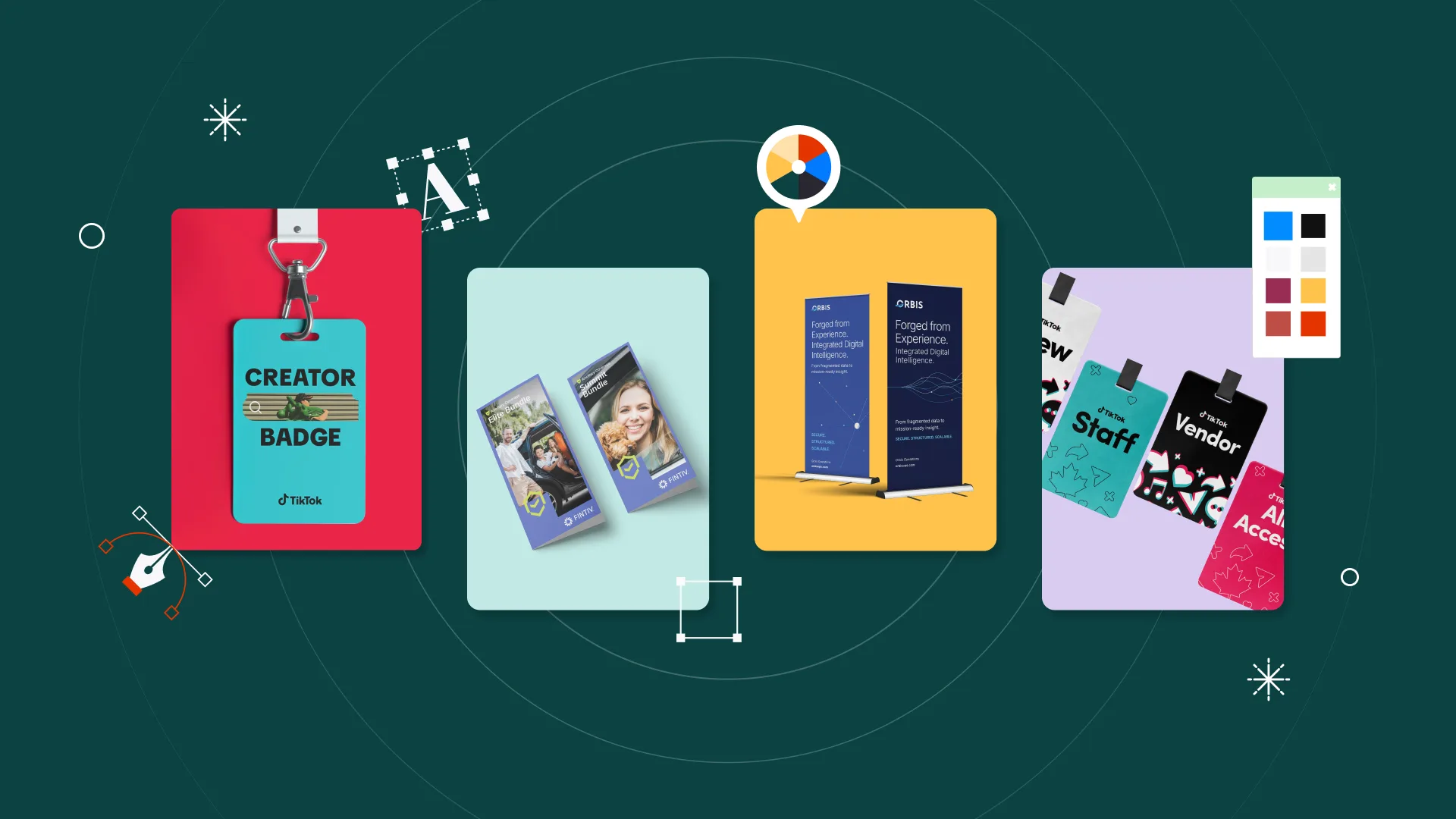
The main thing to know is that graphic design outsourcing services don’t fall under one specific setup. It can mean hiring a freelancer to create visuals for a product launch. An agency can lead a full brand refresh. A design subscription can handle recurring assets like ads, social graphics, and campaigns as your marketing calendar priorities change.
Why do marketing teams outsource graphic design?
Time, capacity, budget, and access to specialized skills are usually the biggest reasons.
Design needs can change quickly. Your team might need extra production support during a busy campaign, then motion graphics or web design for the next project. That’s when hiring full-time for every skill or temporary workload increase isn't always practical.
Budget plays a role, too. According to the U.S. Bureau of Labor Statistics, the median annual wage for a graphic designer is $61,300. And salary is only one part of the cost of adding another employee.
Outsourcing gives marketing teams extra support without having to hire every time their needs change. Here are three ways it can help:
1. Add capacity when demand changes
Campaigns, launches, and seasonal pushes can quickly send design requests up. An external team gives you additional capacity during those periods without requiring your permanent headcount to match your busiest month.
2. Access specialized skills when you need them
Not every design need justifies another full-time role. One project may call for illustration, while the next needs motion, presentation, or web design.
Outsourcing lets you bring in the right expertise without hiring separately for every discipline.
3. Give your internal team more room for strategic work
Production-heavy tasks can pull senior creatives away from work that needs deeper brand knowledge, such as campaign concepts, creative systems, and team mentorship.
Moving some of that production work to an external partner can free up your internal team to focus on the work where their context and expertise matter most.
4. Bring in a fresh creative perspective
External designers aren't as close to the assumptions and habits that naturally develop around an established brand. That distance can be useful.
An outside designer can often spot what an internal team has stopped noticing. Whether it’s challenging familiar design choices or catching inconsistencies, they can find new ways to work within your brand without making it feel like a different brand.
Is graphic design outsourcing right for your team?
Outsourcing graphic design work makes the most sense when you have enough design work to need more support, but not necessarily enough of the same work to justify another full-time role.
Here are some signs that outsourcing graphic design may be worth exploring:
- Design requests regularly pile up faster than your team can handle them.
- Campaigns get delayed because there isn't enough design capacity.
- Senior creatives spend too much time on routine production work.
- You regularly need skills your current team doesn't have.
- Your workload changes significantly from month to month.
But outsourcing isn't automatically the right answer.
If your design needs are minimal and occasional, bringing in a freelancer only when needed may be enough. And if you're hiring for a highly strategic role that requires deep company knowledge and constant collaboration, building that expertise in-house may make more sense.
The best approach depends on where your team needs support most. Outsourcing fills capacity and skill gaps so your internal team can focus on work that needs deeper brand context.
Which graphic design outsourcing model is right for you?
The right one depends on your business. Specifically, consider your workload, required support, and team capacity. Let’s take a closer look at each model type.
The easiest way to choose is to look at the kind of support you need. Freelancers work well for defined projects or specialist skills. Agencies are better suited to larger projects that need strategic and creative input. Design subscriptions make more sense when you need ongoing support across different types of design work.

Graphic design agencies
Graphic design agencies typically support larger, more complex projects, such as rebrands, campaign concepts, or brand rollouts.
They’re a strong choice when you need strategic input and support across a major project. However, this model is less practical for routine, high-volume work where the main priority is producing a steady stream of design assets.
Design subscriptions
With a design subscription, your team gets ongoing access to design support for a fixed fee. They’re usually billed monthly, although some providers offer annual plans.
This model works well for teams with steady design needs and changing workloads. It may be less suitable for one-off projects or work that requires deep brand strategy.
If this sounds closer to what your team needs, you can also compare the best design subscription services and see how each provider differ in pricing, capabilities, and support.
Freelancers
A freelancer is an independent creative professional hired for a specific skill or project.
Freelancers are ideal when you have a clearly defined project, such as illustration or motion graphics. They can also be a great option for a single campaign asset. But as your design needs grow, managing the work can start to take more time. That’s when your team may need another model with steadier capacity and clearer coordination.
Potential challenges to consider
Outsourcing graphic design can take work off your team's plate, but the partnership still needs the right setup. Here are three potential challenges to plan for.
Onboarding still requires effort
External designers need enough context to understand your brand before they can produce work that feels consistent.
Expect to spend time sharing your brand guidelines, target audience, existing assets, and examples of past work. Skipping this step can lead to unnecessary revisions later.
What to check: Ask potential providers what their onboarding process looks like and how they document what they learn about your brand.
Communication can become another bottleneck
Outsourced design work still needs clear ownership on your side. If no one is responsible for answering questions or consolidating feedback, projects can stall between stakeholders.
Clear roles make effective project management easier, especially when your internal team is working with an outside design partner.
What to check: Find out who manages communication on the provider's side, where feedback is shared, and who keeps projects moving when questions come up.
Quality varies
The outsourcing model alone doesn't tell you what quality to expect. Two providers offering similar capabilities can have very different processes for reviewing work before it reaches you.
What to check: Ask who reviews each deliverable, whether there is a formal QA process, and how the provider maintains quality when several designers work on your account.
How to outsource graphic design: 9 things to check before choosing a provider
Choosing a provider takes more than comparing portfolios and pricing. You also need to know how they'll work with your team once the projects start coming in.
Use these nine checks to narrow your options and find a setup that fits how your team actually works.

1. Start with your actual workload
Before comparing providers, get clear on what you need them to solve.
Look back at the last two or three months. Which projects created bottlenecks? What stayed with senior designers because no one else had capacity? Where did deadlines become difficult to manage?
This gives you a clearer picture of whether you need ongoing capacity, a specialist skill, or support during busier periods.
2. Check whether the portfolio matches the work you need
A beautiful brand identity tells you very little about how a team handles a high-volume paid social account. Likewise, hundreds of social posts don't prove expertise in UX/UI or motion graphics.
Ask to see work in the disciplines you'll use most often. Look beyond aesthetics, too. Is the execution consistent across different formats? Can the team adapt to different visual styles? Does the work show the level of quality your brand needs?
Relevant experience tells you more than an impressive portfolio that has little in common with your day-to-day work.
3. Understand who will work on your account
If you're considering an agency or design subscription, find out how the team is structured.
Will you work with dedicated designers or a rotating pool? Is there a project manager coordinating timelines and requests, or will your team manage projects directly with designers?
Continuity is important when your brand has detailed guidelines or campaigns require context that takes time to learn. That context should include a clear understanding of your target audience, so designers know who the work needs to resonate with, not just how it should look.
Also ask who reviews the work before it reaches you. A designer whose work is checked by an art director has a different quality-control process from someone working independently.
4. Look at how projects and feedback are managed
Outsourcing should reduce the amount of coordination on your plate, not create another layer of it.
Ask where requests are submitted, how feedback is shared, and what happens when several stakeholders are involved.
An efficient design workflow should make it easy to see:
- What's being worked on
- Who owns the next action
- When feedback is needed
- Which version is current
- What has already been approved
This becomes more important as your workload grows. If your marketing manager still has to chase five people over email for every revision, much of the coordination is still sitting with your team.
5. Find out how they handle changing priorities
Marketing priorities move quickly. A product announcement gets pulled forward, a paid campaign needs new variations, or leadership suddenly needs a deck for a meeting.
Ask what happens when that occurs.
Can you reprioritize active requests, or does everything stay in a fixed queue? Can the provider bring in a different specialist when the project changes? What happens when several deadlines become urgent at once?
Their answers will tell you how much flexibility you'll actually have once you're working together.
6. Clarify turnaround expectations
Turnaround times should be clear enough for your team to plan around them.
Ask when you can expect a first draft, how revisions affect the timeline, and whether different types of projects have different delivery expectations.
Be careful about judging providers by one headline turnaround time. A banner resize and a motion design project shouldn't follow the same schedule.
7. See which design capabilities are covered
Marketing work rarely stays in one format for long.
A campaign might start with a landing page and expand into social graphics, email assets, presentations, or motion. Check which capabilities the provider handles with its own team and which require outside specialists.
If your work regularly spans several formats, choosing a provider with broader capabilities can save your team from repeatedly sourcing and onboarding new designers.
8. Double-check pricing and revision rules
Make sure you understand exactly what you're paying for before you commit.
Check how the provider charges, what's included in the scope, whether there are limits on active requests or revisions, and what happens if your workload increases.
It's also worth asking about:
- Source files
- Stock assets
- Font licensing
- Unused capacity
- Cancellation terms
- Rush requests
- Additional specialist work
A lower headline price can become less attractive if the work you regularly need sits outside the standard scope.
9. Confirm ownership, confidentiality, and file access
Get clear on ownership and access before the first project starts.
Confirm who owns the final designs, whether you'll receive editable source files, and where project assets will be stored.
Confidentiality matters, too. Ask how the provider handles sensitive materials and who can access them. If your team works in a regulated or security-sensitive industry, involve the appropriate internal stakeholders before sharing confidential information.
These details may feel secondary when you're comparing creative work, but they can become significant once the partnership is underway.
Five common graphic design outsourcing mistakes to avoid
Choosing one based only on price
Avoid choosing a provider just because the headline price is lower. A cheaper option can end up costing more time if your team has to manage every detail or request too many revisions.
Outsourcing before defining the problem
“We need more design” is too broad.
Start by identifying the real gap. Do you need more capacity, a specific skill, stronger creative direction, or better production support? Each problem may require a different kind of provider.
Expecting one designer to cover every discipline
Design disciplines often overlap, but they require different strengths.
An outsourced freelance graphic designer may not be the right fit if you also need UI/UX or video design support. If your work spans several formats, consider choosing a design subscription or graphic design agency instead.
Treating external designers like an order desk
The more context you give, the better the work comes back. Taking the time to create a clear design brief gives your outsourced graphic design partner the context they need before they start designing.
That context should include more than demographics. Understanding how to approach designing for your target audience helps external designers make choices around hierarchy, messaging, and visual direction.
Ignoring the feedback process
Five stakeholders with five opinions can stall even great design. One person asks to make it bigger while another wants it simpler, so revisions pile up and deadlines slip.
The fix is to put one person in charge of gathering comments and sending a clear round of feedback. Your provider works faster, and your team stops going back and forth on the same decisions.
Ready to find the right design support?
If you've read this far, you already know what to look for: an outsourced graphic design partner with the right capabilities, a clear process, and a team that works like an extension of yours.
Design Force works as a flexible design partner that can adapt as your workload changes. Scale your plan up when demand increases, scale back during quieter periods, and roll over unused hours so your design capacity doesn’t go to waste.
So whether your next request is a landing page, presentation, or motion graphic, you have a team ready to take it on without having to source or look for another specialist.
Add design capacity the moment you need it
Design Force works like part of your team, ready for whatever your calendar throws at it.
FAQs
What is graphic design outsourcing?
Graphic design outsourcing means hiring an external designer or creative team to support your design workload. This can include an agency, design subscription provider, or freelancer.
Is outsourcing graphic design worth it?
Yes, it can be worth it when your team needs more capacity or a wider range of design skills without hiring full-time.
The value depends on the provider’s quality, process, and level of support. It also depends on how much time your team needs to spend managing the work.
Which one should I choose: a graphic design agency, design subscription, or freelancer?
A graphic design agency is often a better fit for larger strategic work, such as a rebrand or campaign concept. A design subscription can support design needs across different formats. A freelancer can work well for a defined project or specialist task.
How much does outsourced graphic design cost?
It depends on the type of provider, scope of the work, and how much support you need.
Freelancers typically charge by the hour or project, which can work well for clearly defined deliverables. Agencies often price by project or retainer, especially when the work involves strategy or larger campaigns. Design subscriptions use recurring plans, making costs more predictable for teams with ongoing design needs.
When comparing options, look beyond the headline price. The number of active projects, revisions, turnaround expectations, specialist capabilities, and level of project management can all affect what you pay and what you get for it.
What graphic design work can I outsource?
Teams often outsource graphic design services for ads, social content, presentations, email design, landing pages, web design, brand collateral, illustration, motion graphics, video, and production adaptations.
Can an outsourced graphic designer follow our brand guidelines?
Yes, but a strong onboarding process is important.
Share more than your colors and fonts. Give the provider audience context, examples, templates, past campaigns, visual rules, and common feedback. This helps them understand how your brand works in real projects.
What should I ask before outsourcing graphic design?
Start with the people. Who's doing the work, and who checks it before it reaches you? Also check the process, from submitting design requests to sharing feedback and receiving handoff files.
Finally, make sure you understand the scope and limitations. Check what design capabilities they offer, how many requests can move at once, and what level of support is included. This helps you choose a partner that can actually match your workload, not just your budget.